Skip to content
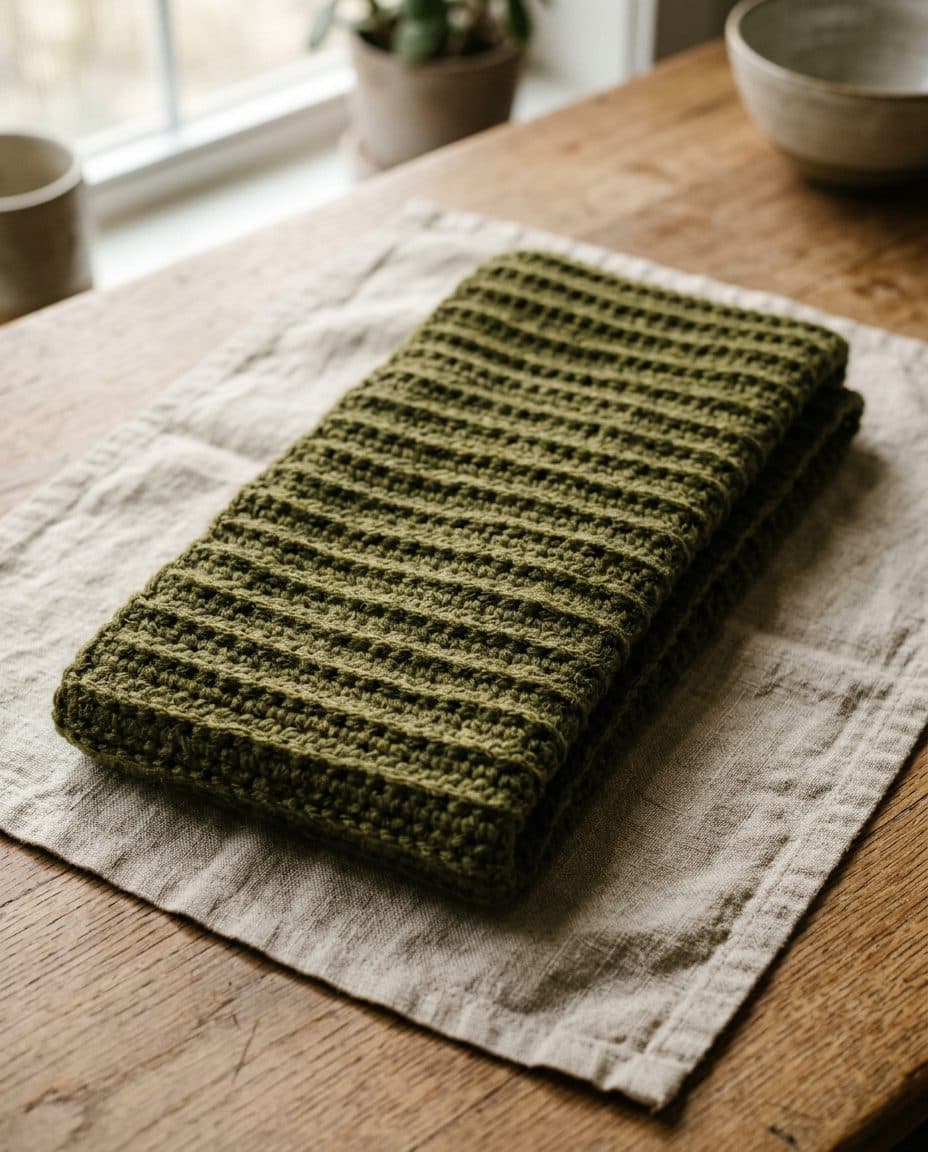
Ridgeline Scarf, preview render
Preview render

Free crochet pattern · beginner · aran weight

Ridgeline Scarf

A unisex crochet scarf worked lengthwise so the camel-stitch ridges run the full length of the piece. Deep horizontal texture is created by working half double crochet stitches into the third loop, producing bold, rope-like ridges across the fabric.

Gift-ready in a weekend

Finished / weight

Approximately 72 in long × 7 in wide (unstretched)

Gauge

12 sts × 10 rows = 4 in (10 cm) in half double crochet with 6.0 mm hook

Yarn

Aran weight, 400 yards recommended; wool, wool-blend, or acrylic in any color

Needles / hooks

US J-10 (6.0 mm) crochet hook; optional US K-10.5 (6.5 mm) hook for foundation chain only

Notions

Tapestry needle for weaving ends, stitch marker (optional, to mark RS)

Abbreviations

ch = chainhdc = half double crochetcs-hdc = camel-stitch half double crochet: insert hook into third (back) loop of hdc from previous row and work hdcst = stitchsts = stitchesRS = right sideWS = wrong sidet-ch = turning chainsl st = slip stitchrep = repeatbeg = beginningsk = skip

Notes Before Beginning

Note 1The scarf is worked lengthwise. The foundation chain runs the full 72-in length of the scarf. Count your chain carefully before beginning Row 1 — recount twice before joining.
Note 2Chain loosely or use one hook size larger (US K-10.5 / 6.5 mm) for the foundation chain only, then switch back to the J-10 (6.0 mm) hook for all rows. This prevents the long edge from pulling in.
Note 3The t-ch at the beginning of each row counts as the first hdc and is worked into as a stitch by the following row. The last stitch of every row is worked into the top of the t-ch from the previous row.
Note 4The camel stitch (cs-hdc) is worked by inserting the hook under only the third (back) loop of each hdc — the horizontal bar visible on the back face of the stitch — rather than under both top loops. This creates the raised ridge on the RS.
Note 5Row 1 is the foundation row worked in both top loops of the chain (standard hdc). Rows 2 onward alternate between standard hdc rows (both top loops) and camel-stitch rows (third loop only) to build the ridge pattern.

Foundation Chain

FoundationUsing J-10 (6.0 mm) hook — or K-10.5 (6.5 mm) for a looser chain — ch 218. Count carefully: you should have 218 ch. This produces 216 working sts plus 2 ch for the beg t-ch of Row 1.218 sts

Body

Row 1 (RS)Switch to J-10 (6.0 mm) hook if you used a larger hook for the chain. Ch 2 (counts as first hdc), turn. Hdc in 3rd ch from hook and in each ch across to end. (216 hdc, including t-ch)216 sts
Row 2 (WS)Ch 2, turn (counts as first hdc). Hdc in both top loops of each st across to t-ch, hdc in top of t-ch. (216 hdc)
Row 3 (RS)Ch 2, turn (counts as first hdc). Cs-hdc in third loop of each st across to t-ch, cs-hdc in top of t-ch. (216 sts)
Row 4 (WS)Ch 2, turn (counts as first hdc). Hdc in both top loops of each st across to t-ch, hdc in top of t-ch. (216 hdc)
Row 5 (RS)Ch 2, turn (counts as first hdc). Cs-hdc in third loop of each st across to t-ch, cs-hdc in top of t-ch. (216 sts)
Row 6 (WS)Ch 2, turn (counts as first hdc). Hdc in both top loops of each st across to t-ch, hdc in top of t-ch. (216 hdc)
Row 7 (RS)Ch 2, turn (counts as first hdc). Cs-hdc in third loop of each st across to t-ch, cs-hdc in top of t-ch. (216 sts)
Row 8 (WS)Ch 2, turn (counts as first hdc). Hdc in both top loops of each st across to t-ch, hdc in top of t-ch. (216 hdc)
Row 9 (RS)Ch 2, turn (counts as first hdc). Cs-hdc in third loop of each st across to t-ch, cs-hdc in top of t-ch. (216 sts)
Row 10 (WS)Ch 2, turn (counts as first hdc). Hdc in both top loops of each st across to t-ch, hdc in top of t-ch. (216 hdc)
Row 11 (RS)Ch 2, turn (counts as first hdc). Cs-hdc in third loop of each st across to t-ch, cs-hdc in top of t-ch. (216 sts)
Row 12 (WS)Ch 2, turn (counts as first hdc). Hdc in both top loops of each st across to t-ch, hdc in top of t-ch. (216 hdc)
Row 13 (RS)Ch 2, turn (counts as first hdc). Cs-hdc in third loop of each st across to t-ch, cs-hdc in top of t-ch. (216 sts)
Row 14 (WS)Ch 2, turn (counts as first hdc). Hdc in both top loops of each st across to t-ch, hdc in top of t-ch. (216 hdc)
Row 15 (RS)Ch 2, turn (counts as first hdc). Cs-hdc in third loop of each st across to t-ch, cs-hdc in top of t-ch. (216 sts)
Row 16 (WS)Ch 2, turn (counts as first hdc). Hdc in both top loops of each st across to t-ch, hdc in top of t-ch. (216 hdc)
Row 17 (RS — final row)Ch 2, turn (counts as first hdc). Cs-hdc in third loop of each st across to t-ch, cs-hdc in top of t-ch. (216 sts) Fasten off, leaving an 8-in tail.

Border (optional)

Border Rnd 1With RS facing and J-10 (6.0 mm) hook, join yarn with sl st to any corner. Work 1 hdc in each st along the long edges and 1 hdc in each row-end st along the short edges, placing 2 hdc in each corner st to turn. Sl st to first hdc to join. Fasten off.

Finishing

Weave in all ends securely using a tapestry needle, running each tail in two directions for security. Wet-block the scarf by soaking in cool water for 10–15 minutes, gently pressing out excess moisture in a towel, then laying flat to the finished dimensions (72 in × 7 in) and allowing to dry completely. Blocking opens the camel-stitch ridges and evens the tension along the long edges.

Notes

SIZING: Each additional 2 rows of body adds approximately 0.8 in to the width. To widen the scarf to 9 in, work 21 rows instead of 17. To lengthen or shorten the scarf, add or subtract stitches from the foundation chain in multiples of 1 (any count works). Each 12 sts added or removed changes the length by approximately 4 in. COMMON MISTAKES: (1) Losing the turning chain — always work the final stitch of each row into the top of the t-ch from the previous row or the scarf will decrease in length over time. (2) Working the camel stitch into the wrong loop — on RS rows, feel for the horizontal bar on the back side of each hdc; inserting into the wrong loop produces a flatter, less defined ridge. (3) A tight foundation chain will cause the long edges to curl inward — always chain loosely or use a larger hook for the foundation. YARN: A smooth, plied aran-weight yarn shows the ridges most clearly; heavily textured or fluffy yarns may obscure the camel-stitch detail.

Knit this row by row — free

SkeinSmart keeps your place in any pattern, syncs across devices, and turns your yarn stash into a shopping list. Describe a project and get your own pattern in seconds.

Start tracking this pattern →

AI-drafted, human-run · this version drafted Sep 20, 2026. Always swatch and verify stitch counts before casting on.